Building a home is a major decision – one that comes with significant investments, emotions, dreams, and uncertainties. For a housebuilding company, it’s incredibly valuable to understand what the buyer goes through and how to support them at each stage.
Here's one example of a journey that leads to an outstanding customer experience – and how Visiofy can support your process from beginning to end.
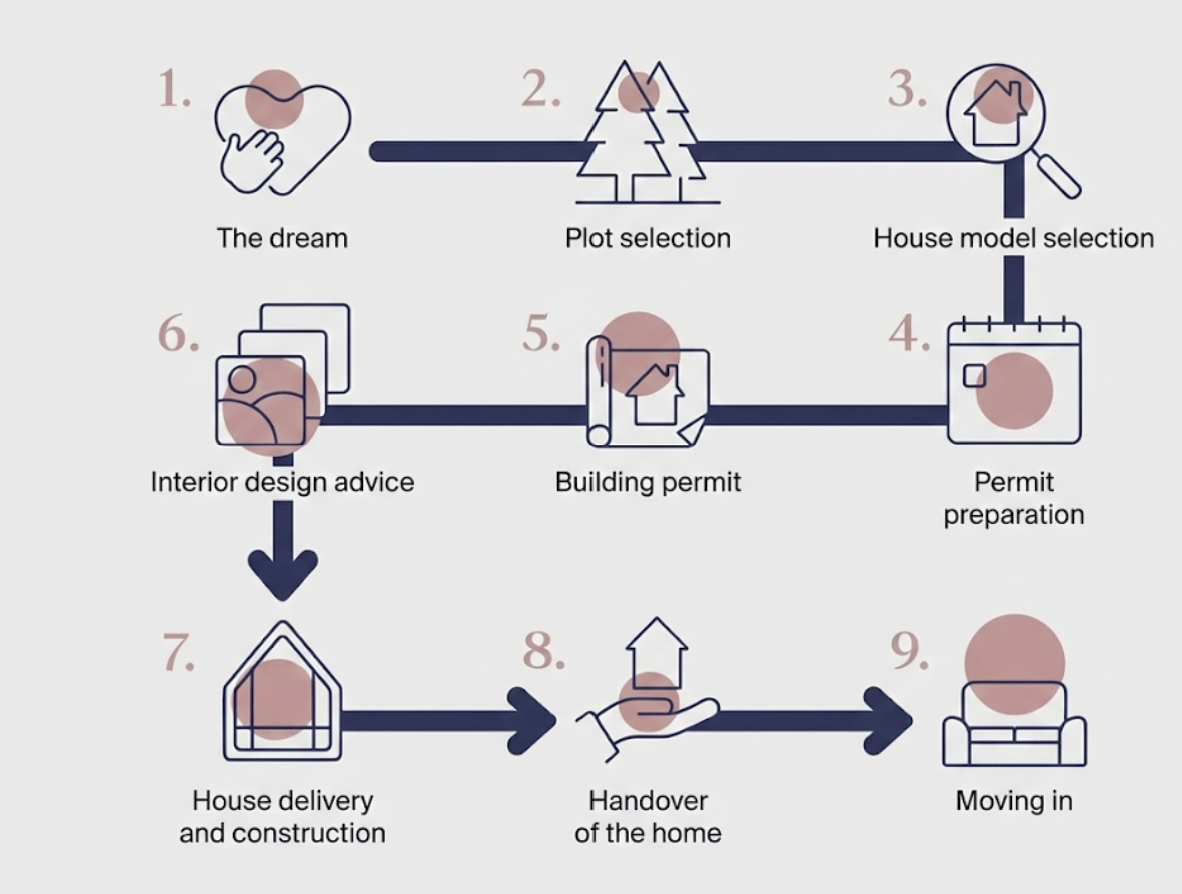
1. They Start Dreaming of a New Home
The journey often starts with a feeling: the need for a yard, more space, or simply a solution that better fits the current life situation. The buyer might not yet know exactly what they want – but they know something needs to change.
2. The Search for Information Begins
Google searches, social media, conversations with friends. People are seeking experiences, comparing solutions, sketching out budgets. First impressions of building companies are formed here – and many options get filtered out early.
3. Landing on a Company’s Website
Once something grabs the buyer’s attention, they check out the website. This is where they decide: is this builder worth contacting?
Beyond price, delivery stage and options, website content plays a key role – including house models, inspiration images, a clear structure, and an easy way to book a meeting.
Our tip: A great way to stand out is to embed or link to an interactive virtual model in your digital materials. When potential buyers can move through the space and explore scale freely, it’s easier to build trust and prompt contact. The same model can also be used at trade fairs – via QR code on printed materials or experienced through VR goggles.
4. Building Trust During the Meeting
By the time the buyer arrives for a meeting, they’ve usually done some homework. This is the moment to build trust and clarify all the things they didn’t know to ask.
Want to stand out? Include a virtual walkthrough of your homes. Let buyers explore the space on their own terms, and you're already one step closer to earning their trust. Tools like virtual models, planning software, and realistic visualizations help push the decision process forward. Customers can also explore the model on-site using VR, which helps the space come alive. Here's how to present your Visiofy model with VR.
Oh, and these same models work brilliantly at events too – catch trade fair visitors' eye either with guided VR walkthroughs or a simple QR code on a brochure.
5. The Waiting Game & Final Decision
During the meeting, buyers often get excited – a good salesperson makes the plan feel personal and possible. But once they leave and regular life kicks in, enthusiasm can fade and doubt creeps in: “What if this isn’t the right choice?”, “What if something goes wrong?”
That’s when it’s crucial to have a concrete model to revisit. A virtual model helps buyers re-examine spaces, think through potential risks, and ease their doubts with something tangible.
Instead of letting worry spiral, they can revisit their future house whenever they need to – and move forward with clarity.
6. The Deal is Made
Once the decision settles, the buyer commits. While the deal may feel like the finish line, the customer experience is really only halfway. There can still be moments of doubt or stress – the investment is significant, and the project consumes time and energy.
With a clear plan supported by a virtual model, the buyer can stay on track, communicate with family, and proceed with greater confidence.
7. Ongoing Support After the Decision
The project begins – but it should definitely not be the end of customer care! Buyers benefit greatly from being able to revisit their plans, share them with others, and confirm that everything is progressing as expected.
8. Smoother Construction
It’s not uncommon for a space to feel surprisingly small once interior walls go up – especially if the buyer was only imagining it based on floor plans.
But when they’ve already explored the home virtually – with walls, furniture, and finishes in place – they have a much clearer picture. Surprises are minimized. When buyers understand the plan thoroughly in advance, unexpected issues are reduced. And that makes life easier for the builder too.
9. A Memorable Customer Experience
Eventually, the home is complete – but the memory of the housebuoilding journey lingers. When buyers feel understood and included throughout the process, it creates satisfaction, referrals – and sometimes even a future project down the road.
At Visiofy, We Wanted to Bridge all Gaps in the Customer Journey at Once
We believe in making visible what floor plans and blueprints often leave to imagination: what the future home feels like and how much thought has gone into each decision.
Our solution brings clarity to the customer from the very first steps of their homebuying journey – and supports builders and remodelers in selling more smoothly, with less effort.
Frequently asked about the homebuying journey
You might also like: